It is not unusual to see a variety of cars parked with their hoods open and students changing their oil in the Jurupa Valley High School auto garage.
This year, two cars parked there don’t ever require an oil change.
-2.jpg) Auto II students in Richard Leach’s class are the first cohort in Jurupa Unified to build a fully-functional electric vehicle (EV) from the ground up. The cars drive a maximum speed of 50 miles per hour.
Auto II students in Richard Leach’s class are the first cohort in Jurupa Unified to build a fully-functional electric vehicle (EV) from the ground up. The cars drive a maximum speed of 50 miles per hour.
“I feel very fortunate that we are working on the (electric vehicle),” said Jesus Moreno, Jurupa Valley High School 11th grader. “We are the first (class) to work on a project like this (at) this school.”
Students learned how to assemble and install hydraulic brake systems, work on a vehicle’s low- and high-voltage systems, and, most importantly, think critically as a team. Under the supervision of Mr. Leach, students learned how to work safely with electricity.
“This is an effort to keep up with the rapidly changing landscape of the autotechnology industry,” said Jenna Saugstad, Coordinator of Career Technical Education (CTE). “Students are learning the entry-level of EV technology.”
For senior Samantha Valle and her peers in Auto II, installing the hydraulic brake systems was the hardest part of building an EV themselves.
“This class and pathway made me feel like I can do things in uncomfortable situations that maybe I wouldn’t have done before this class,” said Samantha. “Now I feel like I can go in new places like this (garage) and feel okay that if I don’t know this right now, I can learn.”
-2.jpg)
The Auto Pathway consists of Auto I and Auto II, a two-year pathway that teaches students the basics of automotive technology, such as terminology, oil changes, to replacing spark plugs, and rebuilding engines.
Auto II taught 12th grader Dennis Aguirre to be open to change and adapt to new technology with the future of automotive technology.
“This is my favorite class because I get to build,” Dennis said. “I enjoy the hands-on (lessons) we get to do.”
“It’s amazing just to have these opportunities to do this and to be teaching this,” said Mr. Leach.“This is a great opportunity for our students to be able to have this embedded in the autoshop curriculum.”
Building a fully-functional EV required students to review one another’s work, hold each other accountable, and collaborate to troubleshoot when faced with an obstacle.
Jesus enjoyed working on the dashboard low-voltage panel the most, describing the visuals and functionality of the wiring as the nervous system of the vehicle.
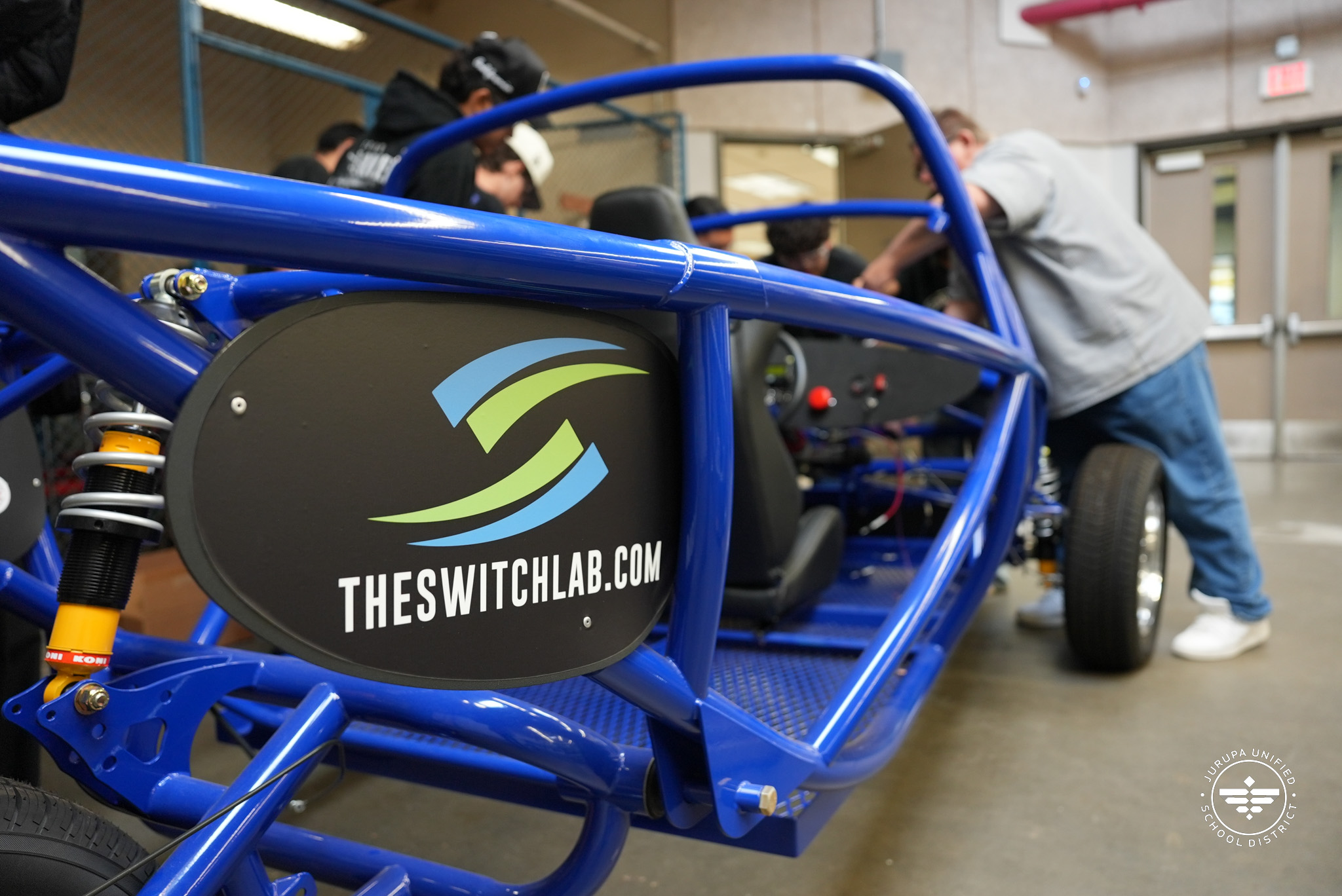
Once completed, JVHS staff will test drive the vehicles, then students will break them down for the next class to rebuild them.
Students learned from The Switch program’s reusable kit. The kit includes materials, instruction manuals for the students, and summer training for Mr. Leach so he can guide the students through the challenging process.
The Switch program was funded through the K-12 Strong Workforce grant and is a collaboration between JUSD, local community colleges, and the Inland Empire/Desert Regional Consortium (IEDRC). The K-12 Strong Workforce grant is ongoing statewide funding to support K-12 local education agencies to improve and expand CTE courses. The Inland Empire/Desert Regional Consortium is a collective of workforce education and training providers led by California Community Colleges in Riverside and San Bernardino counties.
“There are always conversations with all our CTE programs on how we can continue to scale up those programs, bring in relevant products, and industry experiences for our students,” said Ms. Saugstad.
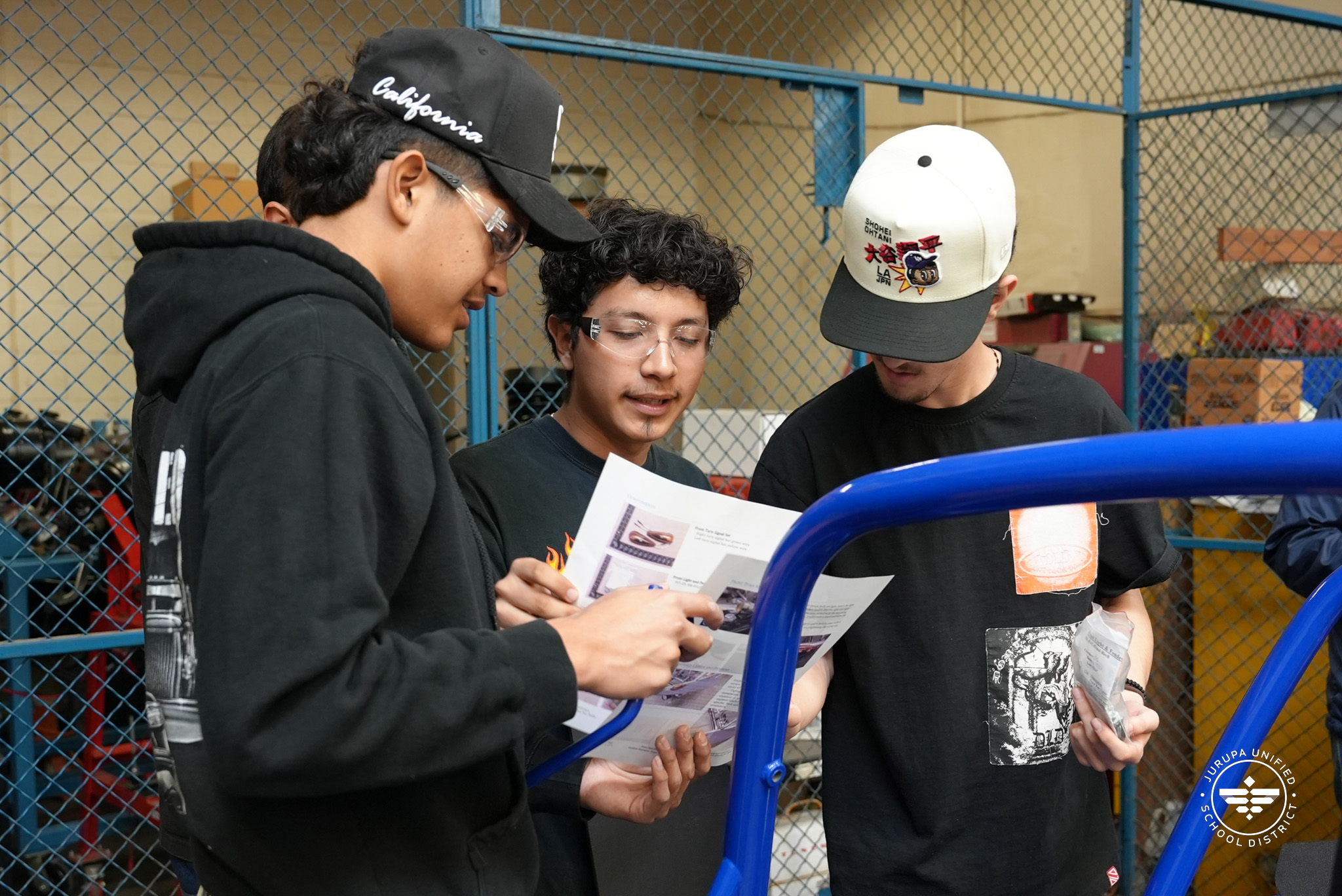 Learning innovative skills related to electric vehicles sets our students apart when applying to apprenticeship programs, Mr. Leach said.
“It allows students to have a greater toolbox of knowledge when going into the workforce after graduation,” said Mr. Leach.