Every day, Mariana Lopez Ramos, Foster and McKinney-Vento Counselor, spends time in the Educational Equity department's filing room assembling hygiene kits containing shampoo, toothbrushes, mittens, socks, and other essential hygiene products.
For many homeless or foster families, these simple kits are a lifeline. When their belongings are stolen at a housing shelter, they know Ms. Lopez Ramos will provide them with a bag of items that most of us take for granted.
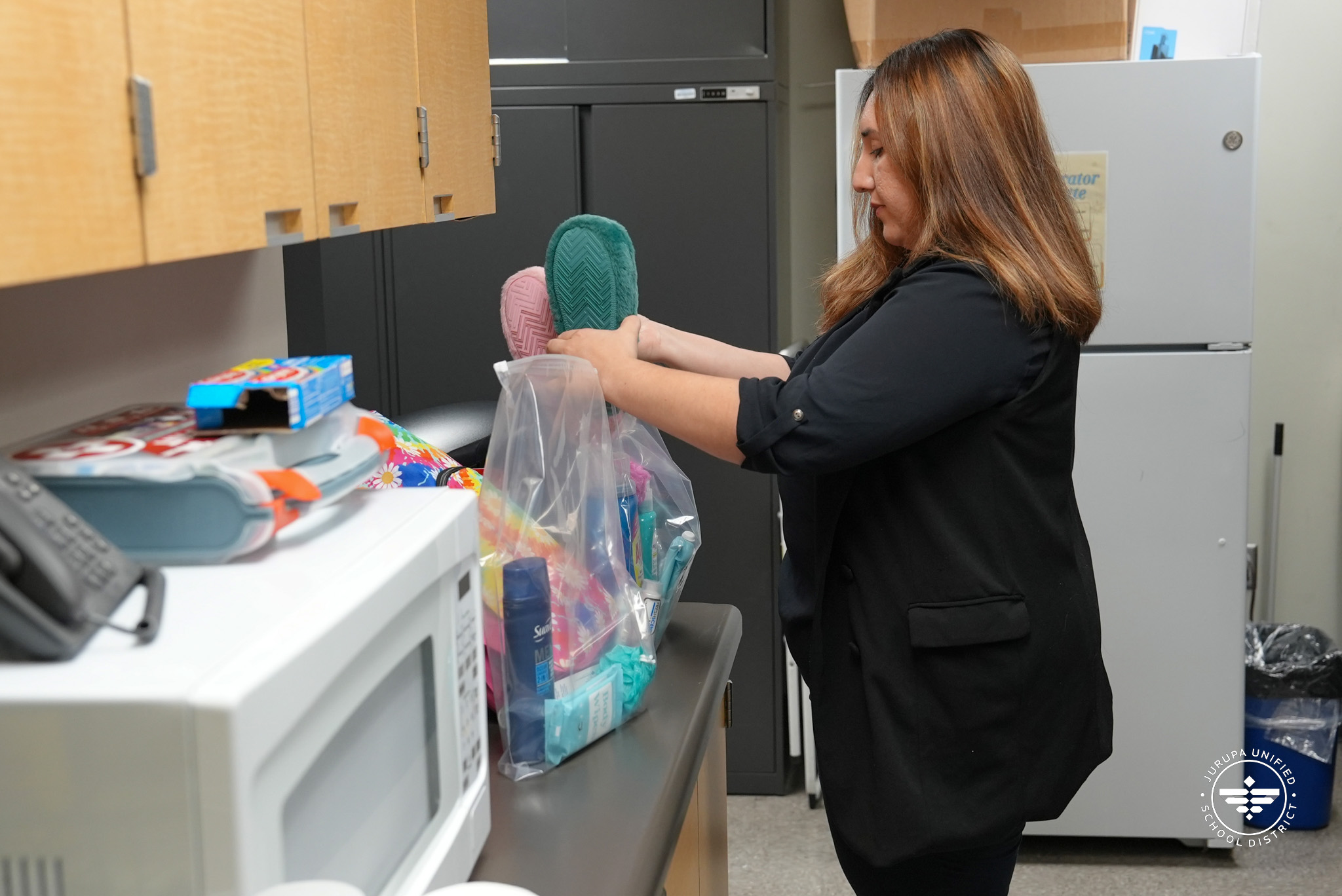
November is recognized as National Homeless Youth Awareness Month, but the Educational Equity team supports our families in need year-round. Currently, 232 families are considered homeless in the Jurupa Unified School District.
“We want to bring awareness that there are different forms of (homelessness),” said Ms. Lopez Ramos. “The importance of this month is to highlight the support that our students and families can receive through the district.”
Homelessness does not only mean living on the streets or out of a vehicle; it’s also our families who live doubled up with another family due to financial hardships, or those living in shelters due to natural disasters.
Ms. Lopez Ramos works with families by managing their cases and connecting them to housing and services such as social, behavioral, and counseling through the Parent Involvement and Parent Outreach (P.I.C.O.) department to help end their cycle of homelessness.
“There might be fears around (homelessness). We are here to support. We are not here to add more pressure on the family,” said Ms. Lopez Ramos. “We want to provide resources – that is our main and primary intention.”
Housing surveys embedded in the enrollment process or re-enrollment paperwork in February help identify families experiencing homelessness to ensure that JUSD provides resources and care for families who need it.
-2.jpg)
“A lot of the time, our families don’t know about the resources available to them,” said Yesenia Jimenez, Behavioral Health Peer Specialist. “It’s important that we help our families in every way we can.”
The Educational Equity team of behavioral health peer specialists and site liaisons works diligently at school sites to make sure that they feel engaged with their school community and help them meet their attendance and academic goals.
There are 24 site liaisons, one at every school site, who connect with students and their families and create activities for students to make them feel engaged at school.
Site liaisons and peer specialists attend monthly professional development trainings to stay up to date on new laws, policies, and community resources to better serve their families.
Leland Oliver, Behavioral Health Peer Specialist, travels between schools to meet with his students weekly and run small social story lessons for any student who needs it.
“We want to make sure that we aren't making (our check-ins) such a direct and serious conversation but more of a light-hearted conversation,” said Mr. Oliver. “Overall, just trying to make sure that (students are) having a positive time and feeling connected with the campus and having someone on campus to talk to.”
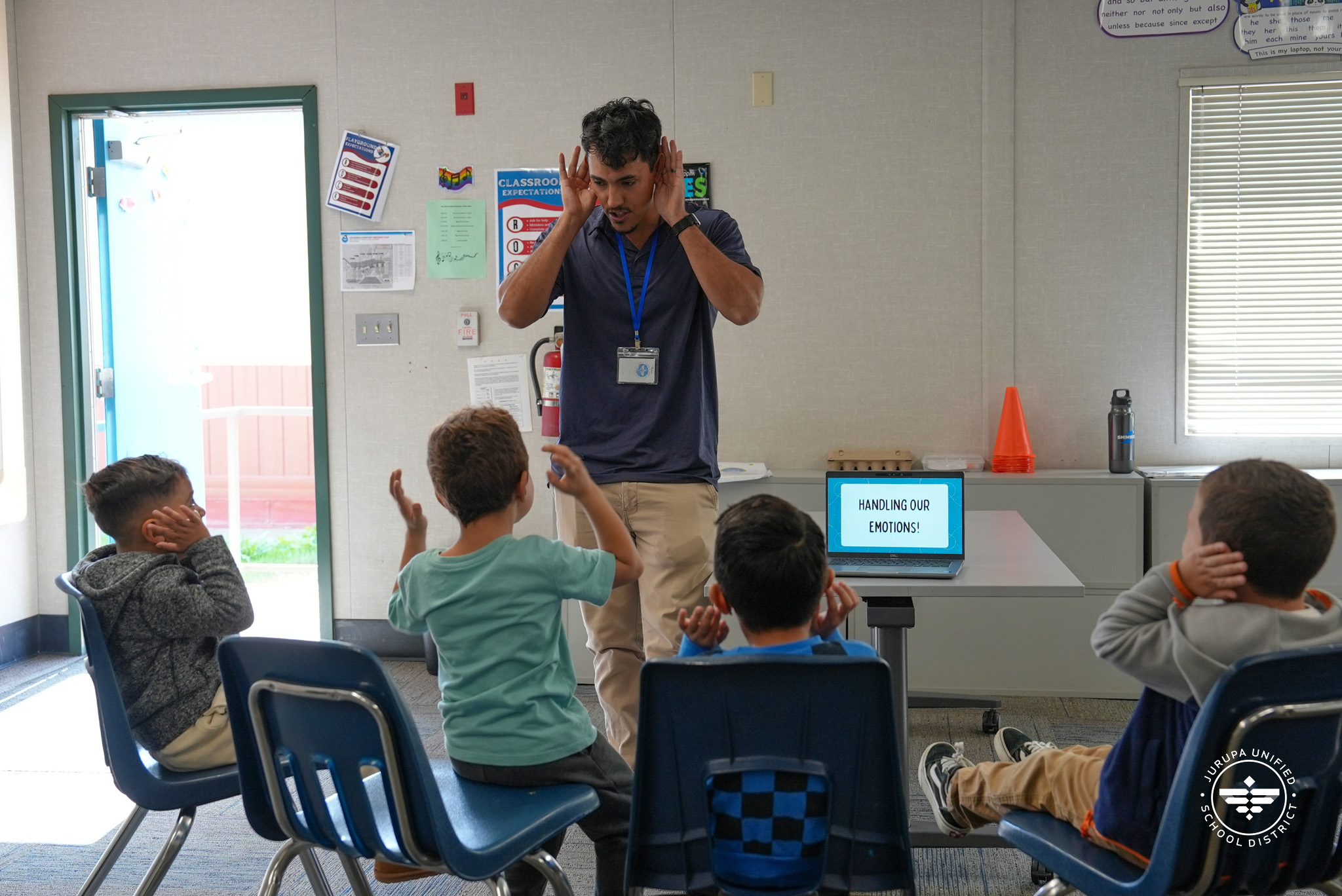
The interactive, small-group, social story lessons are based on behaviors that teachers and staff report their students need additional help with. Led by behavioral health peer specialists, students go over stories, songs, or visual activities to create a positive change in their behavior.
“A common misconception about our homeless youth is that they are bad students or that they have serious behavioral issues, and that’s not always the case,” said Ms. Jimenez. “They just have had a harder time in life than most other kids.”
In the new year, Ms. Jimenez will also pilot a new free Artificial Intelligence tutoring program, Khanmigo, for middle school foster students. The online service, Khanmigo, is accessible to students anywhere, providing stability if students move around.
Peer specialists like Ms. Jimenez also connect families to a wide range of services and local organizations, such as utility and gas assistance programs, Reach Out Jurupa Valley, and shelters like Operation Safehouse and Path of Life.
-2.jpg)
“I want our community to know that our McKinney-Vento families receive stability through school,” said Ms. Lopez Ramos.”They get access to meals, transportation, basic hygiene items, clothing, shoes, counseling, and behavioral therapy.”
The community can help by spreading awareness of the McKinney-Vento program, donating items, and informing Ms. Lopez Ramos of organizations that have resources that would be beneficial to students.
“We don't always know what is going on in a student’s life or in their home life, so just having a little bit more empathy towards them can help,” said Ms. Jimenez.
If you would like to donate items, connect organizations or services to the program, please contact the Educational Equity office at (951)-360-4140 or email
mariana_lopezramos@jusd.k12.ca.us.